
GRAEF shelf life study
Every year, 12 million tons of food end up in the trash in Germany—that's 75 kilograms per capita and household. These figures from the Federal Ministry of Food and Agriculture (BMEL) are alarming.
The main cause is premature spoilage, such as mold, due to incorrect storage. This means that many people simply do not know how to store food in order to extend its shelf life – and we want to change that.
Did you know that it makes a difference where exactly you store your food in the refrigerator? Each category has its own comfort zone—fruit and vegetables are best kept separate at the bottom (keep an eye on your neighbors!), fish, meat, and sausage are best kept one shelf higher, and aromatic cheese is best stored at the top. By the way: not everything belongs in the refrigerator.
Exotic fruits such as bananas and pineapples, as well as popular vegetables such as tomatoes, do not like frosty temperatures at all. In our storage ABC, we explain why you should definitely set up a dark box, what belongs in it, and where exactly bread stays fresh the longest.
However, it is not only proper storage that determines how long a food product will keep, but also its texture. As we discovered together with the Munich-based laboratory Dr. Böhm, everyday classics such as bread, sausage, and cheese keep much longer when purchased in one piece rather than pre-sliced and only sliced as needed. Over several weeks, we closely monitored Gouda, salami, ham, and other foods from a microbiological perspective, and the results confirmed our hunch: whole pieces last up to two weeks longer than sliced and packaged varieties—wow! GRAEF universal slicers therefore help to reduce food waste and packaging waste, and are also easy on the wallet. After all, what isn't thrown away doesn't have to be repurchased. A classic win-win situation!
Here's how to store your food properly:
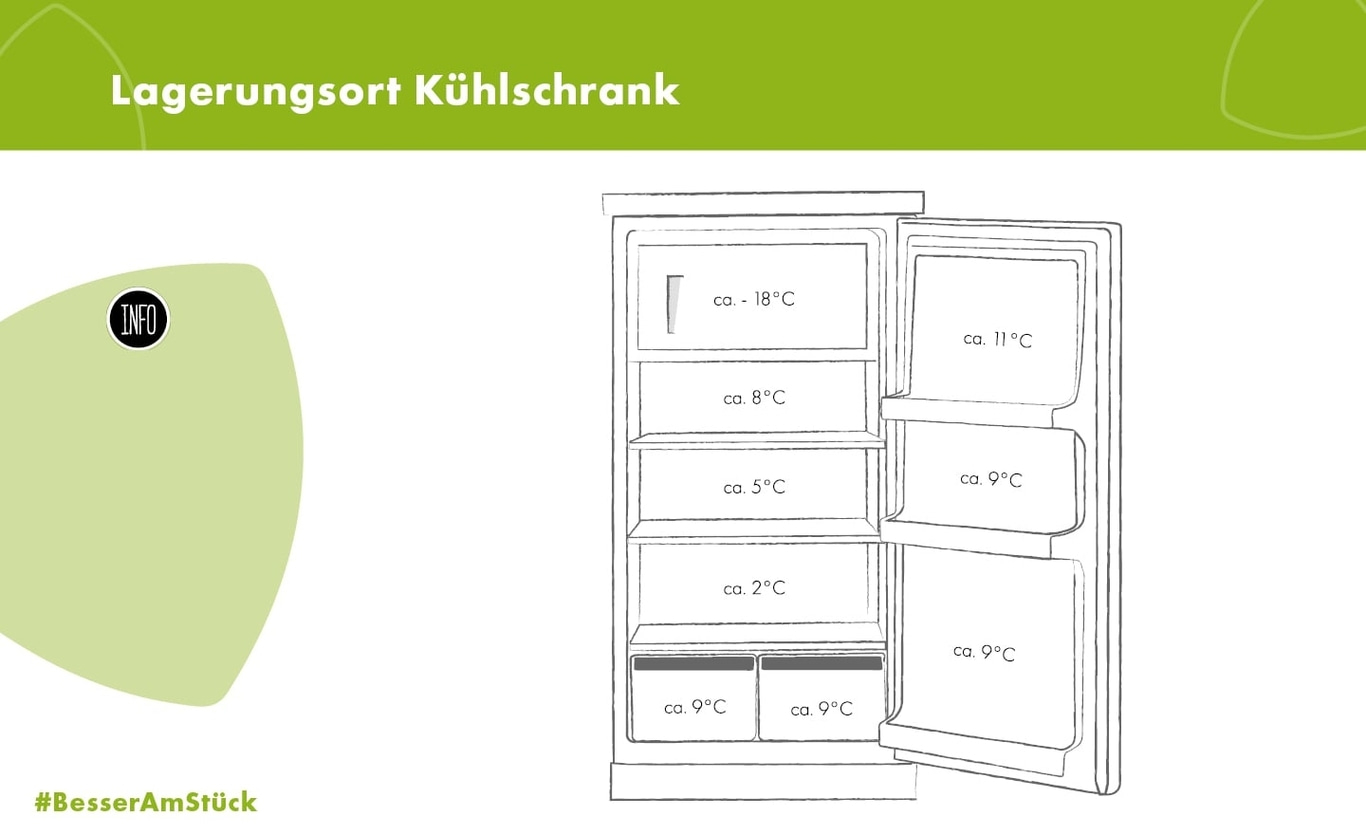
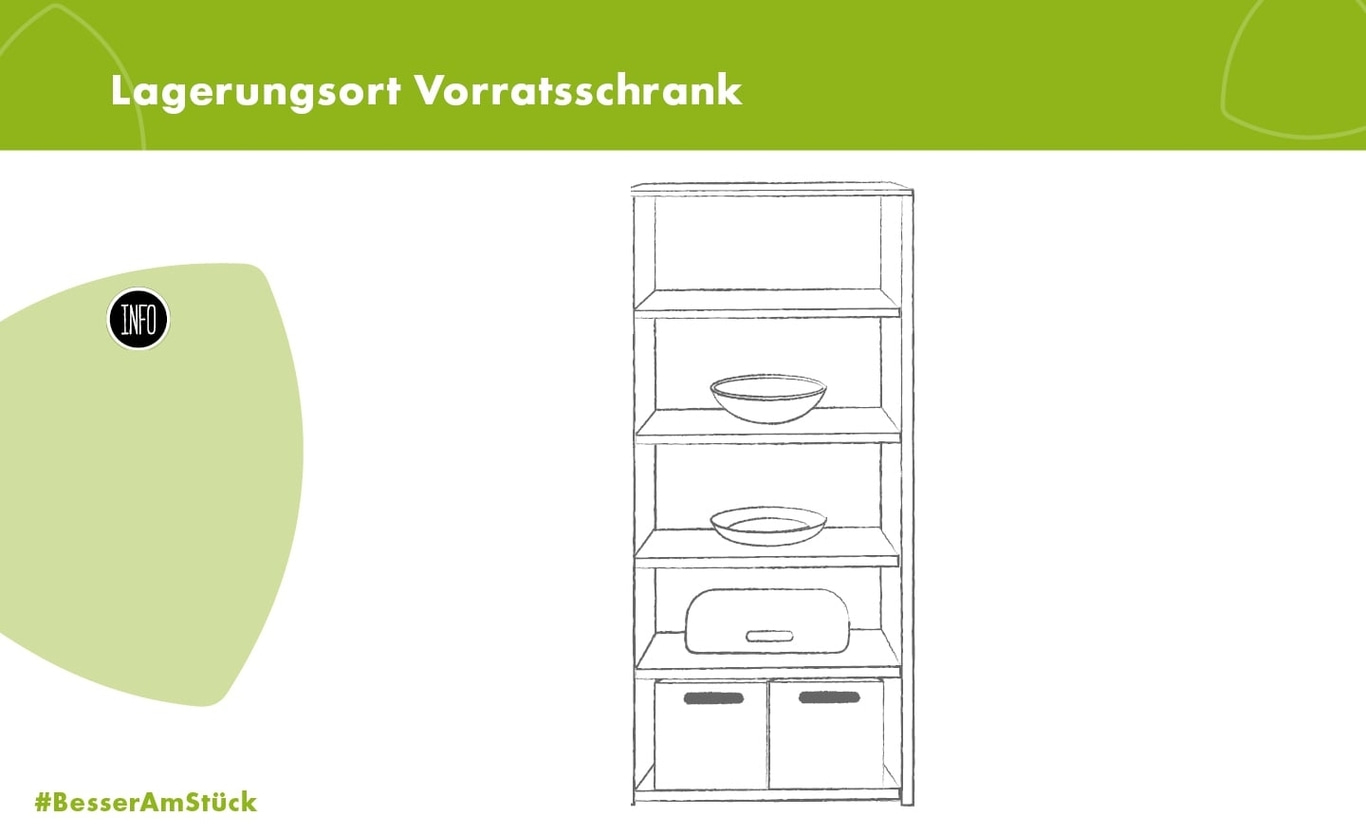
How to store food properly
Use longer instead of wasting
GRAEF Storage ABC
With our Storage ABC available for download as a PDF, you can find the perfect place to store your fruit and vegetables. If you also buy ham, sausage, cheese, and bread in bulk, you'll be the perfect food savers.
GRAEF shelf life study proves: it's better to buy food in one piece!
This way, it lasts longer—up to two weeks longer than sliced meat! A finding by the Munich-based Dr. Böhm laboratory in collaboration with the family-owned company GRAEF.*
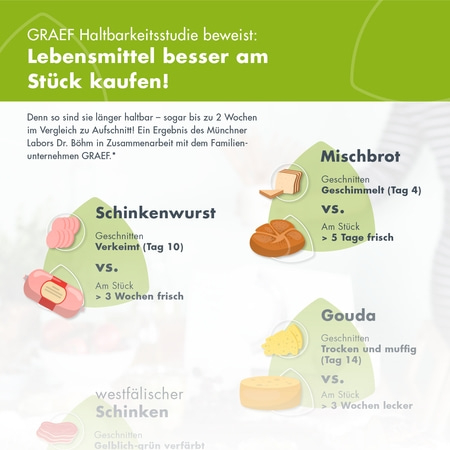
**Observation over 21 days, the same product was purchased both whole and sliced and stored under the same conditions in a standard refrigerator – as in a private household. For comparability, the whole product was always freshly sliced for the tests so that the quality of the slices could always be evaluated.